
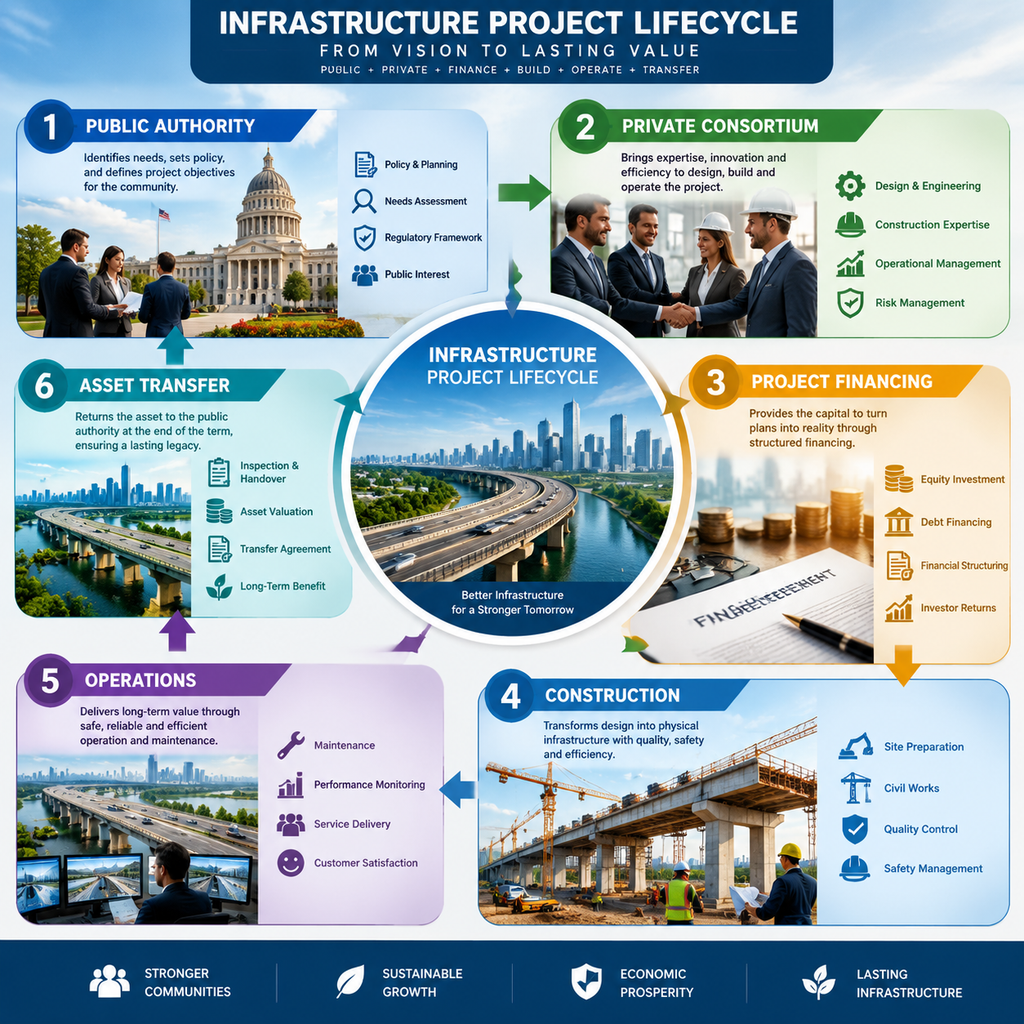
Innovative Financing Mechanisms for Infrastructure Development: A PPP and Tendering Guide
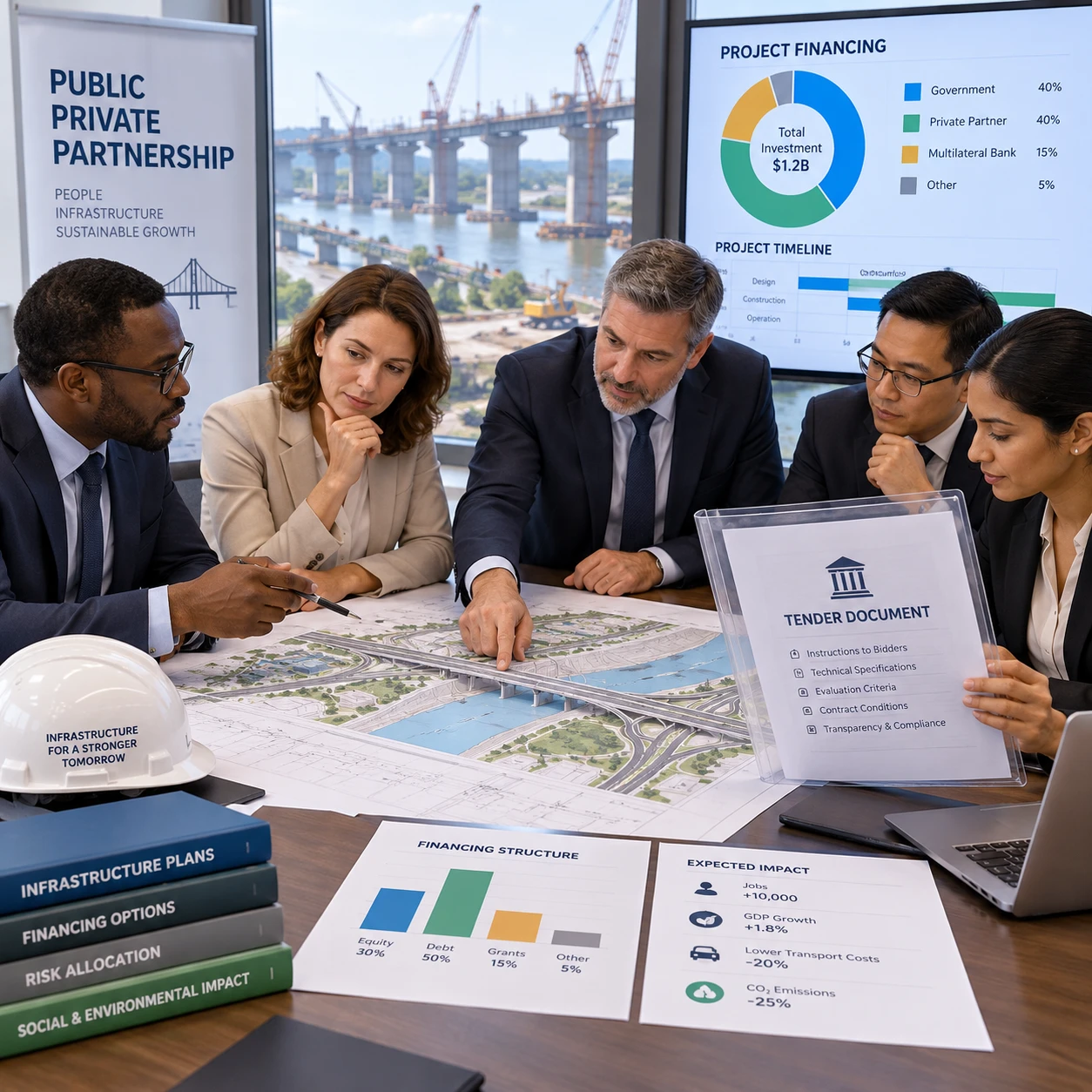
Infrastructure needs often outpace the funds available in public budgets. Governments can use public-private partnerships (PPPs), project finance, blended finance, green bonds, and concessions to bring together different sources of capital and expertise. Each mechanism still has a cost: the right choice depends on project revenues, public affordability, risk allocation, and the quality of the tender process.
Why infrastructure projects need diverse financing
Infrastructure projects need diverse financing because public budgets alone may not cover the upfront cost, long delivery period, and ongoing maintenance of essential assets. Combining funding sources can make projects feasible, but it does not remove their costs or risks.
Roads, water systems, power networks, and public buildings often require large investments before they deliver benefits. Governments must balance those needs against other spending priorities, debt limits, and revenue uncertainty. A project may also face construction delays, demand changes, inflation, or higher borrowing costs over its life.
Infrastructure finance brings together capital, repayment sources, and contractual arrangements to fund development and operation. Public funding remains essential, especially for services that cannot generate enough revenue to attract commercial investment. Private capital may add financing capacity, delivery expertise, or operational discipline, but it must be repaid through user charges, government payments, or another agreed revenue stream.
Before choosing a model, distinguish funding from financing. Financing pays for construction now; funding is the future revenue that ultimately repays it. For example, a privately financed water plant may be repaid over time through customer tariffs or government payments. If the funding source is inadequate, changing the financing structure will not make the project affordable.
PPPs and project finance
PPPs use long-term contracts to combine public objectives with private investment and delivery. In project finance, lenders and investors rely largely on the project’s expected cash flows and contractual protections for repayment.
A PPP may cover design, construction, financing, operation, or maintenance, depending on the chosen structure. In a project-financed arrangement, a special-purpose project company often raises debt and equity, signs agreements with the public authority, and receives revenue under the contract. Lenders assess whether that revenue can support construction costs, operating expenses, debt service, and a reasonable return under realistic scenarios.
Revenue can come from direct user charges, such as tolls, or from availability payments made by the government when an asset meets specified service standards. Availability payments can suit projects where public access should not depend on individual users paying a toll, but they create long-term public obligations that must be assessed against future budgets.
A concession gives a private operator rights and responsibilities to deliver or manage an asset, often with revenue linked to user charges. This can transfer some demand risk to the operator, yet it may be unsuitable where tariffs are politically sensitive or demand is hard to forecast. PPPs work best when outputs are measurable, the contract can be monitored, and risk allocation gives each party responsibility for risks it can manage.
Blended finance, bonds, and other mechanisms
Blended finance combines public or concessional resources with commercial capital, while green bonds raise debt for eligible environmental projects. These and other mechanisms can broaden infrastructure funding, but their suitability depends on project design, market conditions, and credible repayment sources.
In blended finance, a government, development finance institution, or donor may provide grants, concessional loans, guarantees, or other support alongside private investment. Such support can help address a specific barrier, such as early-stage project preparation or a risk that commercial lenders will not accept on standard terms. It should be transparent: the public contribution, intended outcome, and conditions for support need to be clear. Subsidies can improve viability, but they also use scarce public resources and should not conceal a fundamentally unaffordable project.
Green bonds are debt instruments whose proceeds are allocated to eligible environmental investments, such as clean transport, renewable energy, or water efficiency. Issuers need a credible framework for selecting projects, tracking proceeds, and reporting on their use. A green label does not guarantee lower borrowing costs or prove that a project delivers environmental benefits; those depend on market demand, issuer credit quality, and transparent reporting.
Other tools include infrastructure funds, municipal bonds, guarantees, and value-capture mechanisms that use some increase in land value near new infrastructure. Each has different legal, revenue, and capacity requirements. For example, a bond may suit a creditworthy public entity with reliable repayment capacity, while a guarantee may address a defined risk but create a contingent liability if it is called.
Choosing a mechanism for the project
Choose an infrastructure financing mechanism by matching the project’s revenue model, stage, affordability, risks, and financing needs. Compare whole-life costs and public obligations, not only the initial capital raised.
A practical screening sequence is to ask five questions:
- Where will repayment come from? Identify user revenue, taxes, availability payments, grants, or a combination. If no credible funding source exists, reconsider project scope or timing.
- Can performance be measured? PPPs are easier to manage when outputs, service levels, and deductions for poor performance can be written clearly into the contract.
- Which risks can each party control? Assign construction, operating, demand, financing, and regulatory risks according to the party best able to manage them, rather than transferring every risk to the private side.
- Is the project mature enough to finance? Early-stage projects may need feasibility work, permits, land access, and environmental review before lenders can assess bankability.
- Can the public authority afford the commitment? Test expected payments under downside scenarios, including delays, lower demand, and cost changes.
For a project with predictable user revenue, a concession may be worth testing against public borrowing. For a public facility with no practical user-charge model, availability payments may fit better if the government can sustain them. A project with clear environmental outcomes might qualify for green-bond financing, while blended finance may help address a documented viability gap. These are screening examples, not automatic answers: procurement rules, market appetite, and local law also matter.
How financing shapes tenders and risk allocation
Financing shapes infrastructure tenders by determining what bidders must price, what the public authority promises, and how performance and risks are allocated. Tender documents should make payment rules, guarantees, obligations, and evaluation criteria consistent with the selected funding model.
For a PPP tender, bidders need enough information to estimate costs and prepare financeable proposals. That typically includes design and performance requirements, site and demand data, payment formulas, contract duration, relevant permits, and the process for handling changes. If bidders must arrange financing, the tender should also state financial-close requirements and explain what evidence of funding commitments is expected.
Payment terms influence competition. An availability-payment contract should specify service standards, inspection methods, deductions, and the process for disputing performance assessments. A concession tender should explain tariff rules, revenue rights, and any limits on price changes. Guarantees should have defined triggers, caps, duration, and disclosure, so bidders can price them and public authorities can monitor their contingent liabilities.
Risk allocation should be practical, not aspirational. A private partner may manage construction methods and routine maintenance, while a public authority may retain risks tied to land acquisition or policy changes that it controls. Transferring a risk to a party unable to control it can raise bid prices, discourage qualified firms, or lead to renegotiation later. Transparent public procurement helps make these trade-offs visible and gives bidders a fair basis for comparison.
Practical steps and common challenges
Implementing an infrastructure financing model requires feasibility work, a bankability and affordability assessment, transparent procurement, and active contract monitoring. The process should test whether the project can be delivered and paid for under realistic conditions.
Start by defining the service need and comparing delivery options, including conventional public procurement and a PPP. Prepare technical, economic, environmental, legal, and financial assessments. Then test demand and costs under more than one scenario, identify who will bear each major risk, and consult the market before finalizing tender terms. Independent review can help identify assumptions that make a project look affordable only on paper.
Common problems are often avoidable:
- Choosing a financing model before confirming the funding source. The project may attract bids but leave the authority with unaffordable payments. Confirm who ultimately pays and assess long-term budget commitments first.
- Transferring every risk to the private partner. Bidders may add a risk premium or decline to participate. Allocate each risk to the party best placed to manage it and explain the rationale in the tender.
- Relying on optimistic demand or cost forecasts. Debt repayment can become difficult if actual use falls short or construction costs rise. Use independent review and test downside cases.
- Treating financial close as the end of oversight. Weak monitoring can undermine service quality and value for money. Track performance, payments, changes, and contingent liabilities throughout delivery.
Stakeholder alignment matters as well. Finance ministries, procurement teams, regulators, local communities, and service users may have different priorities. Agreeing on service standards, affordability limits, and disclosure requirements early can reduce tender ambiguity. Once a contract is signed, monitor not only construction milestones but also operating performance and the public cost of guarantees or payment commitments.
Frequently asked questions
These answers clarify how project finance, infrastructure tenders, risk allocation, and blended or green financing fit together. The right arrangement still depends on the project’s revenue, legal setting, and public affordability.
How does project finance differ from traditional public funding?
Traditional public funding generally relies on government revenues or public borrowing to pay for infrastructure. Project finance raises debt and equity against expected project cash flows and contractual protections, often through a separate project company. The public sector may still contribute land, grants, guarantees, or payments, so private finance does not mean the project is free to taxpayers.
What role do tenders play in PPP financing?
Infrastructure tenders define the project requirements and invite bidders to compete on a clear, comparable basis. In a PPP, tender documents also shape financing by setting payment terms, performance standards, risk allocation, and the evidence bidders need to demonstrate bankability. Transparent competition can help reveal market pricing, but only if the project information and evaluation rules are credible.
Which risks should public and private partners allocate?
Partners should allocate each risk to the party best able to control, reduce, or absorb it. A private partner may manage construction and operations; a public authority may be better placed to manage certain land, permitting, or policy risks. Demand, inflation, and force majeure risks need project-specific treatment rather than a blanket transfer.
Can green bonds or blended finance support infrastructure PPPs?
Yes. Green bonds can finance eligible environmental assets, while blended finance can combine concessional support with commercial funding to address a defined barrier. Either can complement a PPP, but neither guarantees affordability or bankability. Projects still need a credible repayment source, transparent procurement, and suitable risk allocation.