
Environmental and Social Governance (ESG) in PPP Projects: A Practical Guide for Tenders and Delivery
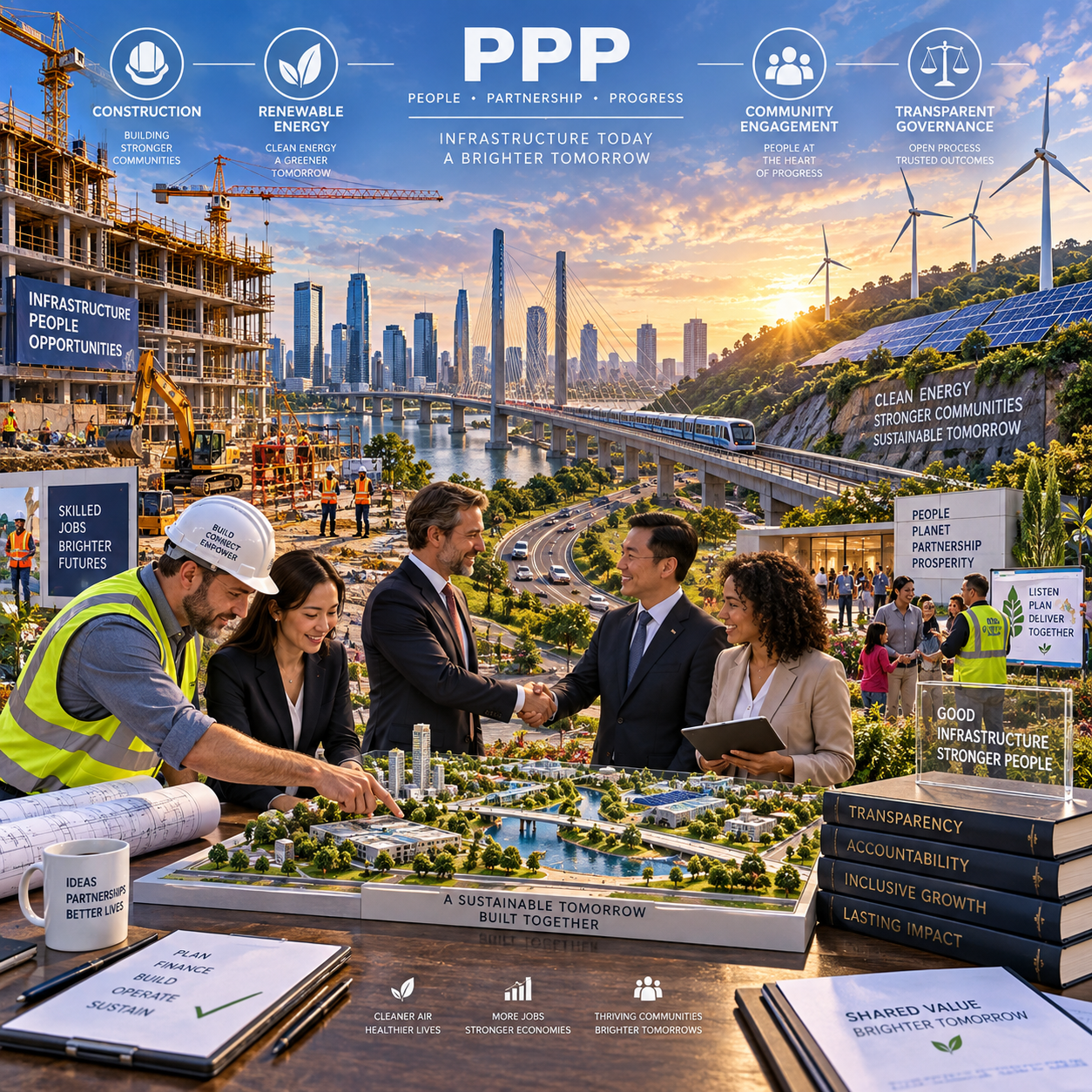
Environmental and Social Governance (ESG) in PPP projects provides a practical framework for protecting the environment, serving affected communities, and maintaining transparent accountability throughout the infrastructure lifecycle. For public authorities and private partners, ESG is most effective when broad sustainability goals become measurable tender requirements, contract obligations, and performance evidence.
What ESG Means in the Context of PPP Projects
ESG in a PPP project is the structured management of environmental impacts, social outcomes, and governance standards from project preparation through handback. It connects public value with the commercial, technical, and financial decisions made by the public authority, private partner, lenders, contractors, and operator.
The three pillars are closely linked:
- Environmental: emissions, energy and water use, biodiversity, pollution prevention, waste, climate adaptation, and resource efficiency.
- Social: labour standards, health and safety, accessibility, inclusion, land acquisition, resettlement, community impacts, and stakeholder engagement.
- Governance: ethical procurement, transparency, anti-corruption controls, accountability, disclosure, data quality, oversight, and clearly allocated responsibilities.
A PPP can meet a narrow construction deadline while still creating long-term environmental or social liabilities. ESG criteria help prevent that outcome by assessing the whole asset lifecycle: feasibility, design, tendering, construction, operation, maintenance, renewal, and handback.
Authorities should also distinguish between an ESG ambition and an enforceable requirement. A statement such as “the project should support sustainability” has limited procurement value. A requirement to reduce operational energy use against a defined baseline, report quarterly, and submit to independent verification is specific enough to manage.
Why ESG Matters in PPP Tenders and Procurement
ESG matters in PPP tenders because it can improve project resilience, public value, risk visibility, and stakeholder confidence when it is built into procurement and contract management. It also helps bidders understand the outcomes they must deliver before they price and allocate risk.
During project preparation, an ESG assessment can reveal issues that affect design, affordability, approvals, insurance, financing, and schedule. For example, flood exposure may justify a different site or drainage design, while limited accessibility may require changes to transport facilities and operating procedures.
In PPP procurement, ESG criteria may be used to assess:
- the bidder’s relevant technical experience and management systems;
- the quality and feasibility of its environmental and social management plan;
- proposed climate resilience, resource efficiency, and lifecycle-cost measures;
- labour, health and safety, community, and supply-chain controls;
- governance arrangements, disclosure processes, and incident escalation;
- the credibility of proposed ESG targets, budgets, personnel, and evidence.
Evaluation criteria must be transparent and proportionate. Awarding points for vague claims about being “green” or “socially responsible” invites inconsistent scoring and possible challenges. Tender documents should define the evidence required, the scoring method, minimum thresholds, and whether a commitment becomes contractual after award.
International guidance can support the design of a project-specific framework. The World Bank PPP Resource Center provides practical material on public-private partnerships, while the IFC Performance Standards are commonly referenced in environmental and social risk management, subject to the applicable jurisdiction and financing arrangements.
Key Environmental Considerations for PPP Projects
Environmental considerations in PPP projects cover the asset’s impact on natural systems and its exposure to environmental risks, including emissions, pollution, resource scarcity, biodiversity loss, and climate hazards. An environmental impact assessment should inform design, procurement, construction, operation, and handback decisions.
Assessment and resource efficiency
An environmental impact assessment should establish baseline conditions and identify material effects before tender submission. Depending on the asset, this may include air quality, noise, water resources, soil, habitats, traffic, energy demand, and cumulative impacts from nearby developments.
Tender requirements can then address measurable outcomes such as:
- energy consumption per square metre, passenger, treatment unit, or operating hour;
- greenhouse gas emissions and fuel use against an agreed baseline;
- water consumption, leakage, reuse, and discharge quality;
- construction waste recovery, hazardous-material handling, and landfill diversion;
- biodiversity protection, habitat restoration, and invasive-species controls;
- resilience to flooding, heat, drought, storms, wildfire, or sea-level rise.
Choosing a higher-performance environmental specification may increase initial capital expenditure. The trade-off should be tested through whole-life costing rather than judged only on the lowest construction price. A resilient design may reduce disruption, emergency repairs, and service failures over a concession lasting 20 or 30 years.
Social Factors to Address Across the Project Lifecycle
Social factors in PPP projects concern how infrastructure affects workers, users, nearby communities, vulnerable groups, and other stakeholders. Strong social impact management combines early consultation, fair treatment, safe delivery, accessible services, and documented responses to complaints.
Key issues include:
- Labour and safety: fair working conditions, worker accommodation where relevant, training, occupational health, traffic management, and contractor safety performance.
- Land and resettlement: land acquisition, livelihood impacts, physical displacement, compensation, cultural heritage, and protections for people with limited legal tenure.
- Inclusion and accessibility: universal design, affordable access, gender-responsive facilities, non-discrimination, and service continuity for vulnerable users.
- Community engagement: accessible information, consultation records, grievance channels, response deadlines, and feedback during design and construction.
Stakeholder engagement should begin before the tender where possible. If affected communities first hear about a project after contract award, the private partner may inherit avoidable opposition, redesign costs, or delays. The tender should identify which engagement activities the authority has completed and which obligations transfer to the private partner.
Social KPIs must measure outcomes rather than activity alone. Counting consultation meetings is useful, but it does not show whether concerns were addressed. Better indicators may include grievance resolution time, lost-time injury frequency, accessibility compliance, local employment against a defined target, or the percentage of affected households receiving agreed assistance.
Governance Requirements for Transparent PPP Delivery
Governance requirements ensure that PPP decisions are lawful, traceable, and accountable from procurement through operations. They cover ethical procurement, conflict-of-interest controls, anti-corruption measures, disclosure, data management, oversight, and responsibility for corrective action.
Public authorities should define governance controls before issuing a tender. These may include:
- declarations of interest and beneficial ownership disclosures;
- rules for communications, confidentiality, bid evaluation, and conflicts;
- anti-bribery requirements covering the private partner and its supply chain;
- audit rights, document-retention periods, and access to project data;
- clear approval thresholds for design changes, subcontractors, and related-party transactions;
- independent supervision and escalation routes for serious ESG incidents.
Accountability must be divided rather than assumed. The authority may retain responsibility for statutory approvals, land acquisition, tariffs, or public policy decisions, while the private partner controls design, construction, operation, and subcontractor management. The contract should state who owns each ESG risk, who pays for mitigation, who verifies performance, and what happens when information is late or inaccurate.
Good governance also protects the integrity of reporting. ESG data should have a defined source, calculation method, reporting frequency, responsible officer, and verification process. Without these controls, a dashboard can create the appearance of oversight while hiding inconsistent baselines or incomplete incidents.
How to Embed ESG in PPP Tender Documents and Contracts
To embed ESG in PPP tender documents, authorities should translate policy objectives into eligibility rules, technical specifications, evaluation criteria, contractual duties, KPIs, reporting requirements, and remedies. Each requirement should be measurable, attributable, and proportionate to the project’s material risks.
A practical tender-to-contract sequence
- Identify material risks: use an environmental and social impact assessment, stakeholder mapping, climate screening, and governance review.
- Set minimum requirements: specify mandatory licences, management plans, labour standards, safety systems, consultation duties, and prohibited practices.
- Design evaluation criteria: score bidder proposals against defined outcomes, methodology, resources, evidence, and lifecycle value.
- Convert commitments into schedules: attach the successful bidder’s ESG plan, targets, reporting templates, and responsibility matrix to the PPP agreement.
- Link performance to consequences: use payment adjustments, cure periods, improvement plans, deductions, or other remedies that comply with the contract and applicable law.
Useful sustainability-linked performance indicators might include construction safety, energy intensity, water consumption, emissions, waste recovery, grievance closure, service accessibility, biodiversity measures, and timely publication of ESG reports. Each KPI needs a baseline, target, measurement unit, frequency, data owner, verification method, and threshold for non-compliance.
Authorities should avoid excessive detail that makes bids expensive without improving outcomes. A focused set of material KPIs is usually more enforceable than dozens of poorly defined indicators. The contract should also permit controlled updates when laws, climate conditions, technology, or stakeholder expectations change, while protecting the agreed risk allocation.
Monitoring ESG Performance During PPP Implementation
ESG performance during PPP implementation should be monitored through baseline assessments, routine reporting, independent verification, stakeholder feedback, incident management, and periodic improvement reviews. Monitoring must continue through construction, operations, refinancing where relevant, major maintenance, and handback.
A practical monitoring cycle is:
- Baseline: confirm environmental conditions, social indicators, asset performance, and data quality before work begins.
- Measure: collect evidence through inspections, sensors, workforce records, contractor reports, surveys, and grievance registers.
- Verify: test high-risk information through the authority’s technical adviser, an independent engineer, auditor, or specialist assessor.
- Respond: classify incidents, assign corrective actions, set deadlines, and escalate repeated or serious failures.
- Improve: review trends at agreed milestones and update controls without weakening contractual accountability.
Incident management should distinguish minor deviations from events that threaten life, the environment, legal compliance, or the project’s social licence to operate. A serious spill, fatality, forced displacement, corruption allegation, or major data breach may require immediate notification, investigation, public disclosure, and a formal remediation plan.
Stakeholder feedback adds information that technical reports may miss. A grievance mechanism should accept complaints through accessible channels, protect people from retaliation, track resolution times, and report recurring themes. At handback, the authority should verify that environmental liabilities, accessibility features, maintenance records, permits, and community commitments have been transferred in usable condition.
Frequently Asked Questions About ESG in PPP Projects
What is ESG in a PPP project?
ESG in a PPP project is the management of environmental effects, social outcomes, and governance controls across the complete partnership lifecycle. It applies to procurement, financing, design, construction, operations, maintenance, reporting, and handback.
How can ESG criteria be included in PPP tender documents?
Authorities can include ESG through bidder eligibility, technical specifications, scored evaluation criteria, minimum safeguards, proposed management plans, KPIs, reporting templates, verification rights, and contractual remedies. Requirements should be clear enough for bidders to price and demonstrate.
Which ESG risks are common in infrastructure PPPs?
Common risks include climate and flood exposure, pollution, biodiversity loss, construction waste, worker accidents, labour abuses, inaccessible services, land acquisition disputes, weak consultation, corruption, poor data, and unclear responsibility for mitigation.
Who is responsible for ESG performance in a PPP contract?
The private partner is usually responsible for obligations within its control, including design, construction, operations, employees, and subcontractors. The public authority retains responsibilities assigned by law or contract, such as approvals or land acquisition. The agreement must allocate each risk explicitly.
How should ESG compliance be monitored and reported?
ESG compliance should be monitored against agreed baselines and KPIs through routine reports, inspections, independent verification, stakeholder feedback, incident notifications, audits, and corrective-action tracking. Reports should identify performance, evidence, deviations, responsibility, and deadlines.
For PPP projects, ESG works best as a management discipline embedded in decisions and contracts, rather than as a separate report prepared after the fact. When public authorities define material risks, bidders price realistic solutions, and operators report reliable outcomes, ESG can strengthen resilience, transparency, and long-term public value.