
The Impact of Geopolitics on Global Infrastructure Tenders

Geopolitical developments can alter an infrastructure tender long before construction begins. A new sanctions regime, trade restriction, diplomatic dispute, or regulatory shift may change who can bid, what materials are available, how lenders price project finance, and whether a contract remains viable.
For public authorities and bidders, the practical task is to identify which political risks could affect a specific project and decide who can manage them. In public procurement and public-private partnerships (PPPs), clear rules and realistic risk allocation can help preserve competition and delivery, though no contract can remove every external risk.
Why geopolitics matters in infrastructure procurement
Geopolitics matters because infrastructure projects often depend on cross-border investment, equipment, finance, and long-term government commitments. Shifts in political relations or policy can therefore affect tender design, bidder confidence, and delivery after award.
A road, port, power grid, or rail link may take years to procure and decades to operate. During that period, governments can revise foreign investment rules, licensing requirements, procurement policies, or trade relationships. A project that relies on imported turbines or signalling equipment, for example, may face new approval requirements even if the tender itself was issued under stable conditions.
Political developments also influence foreign investment. Investors and lenders assess whether a host country is likely to uphold contracts, permit currency transfers, maintain agreed tariffs, and provide a workable dispute-resolution process. Perceived instability can narrow the pool of funders or lead them to seek stronger protections, which may affect affordability and procurement timelines.
That does not mean geopolitical risk automatically makes a tender unbankable. The useful distinction is between risks that can be anticipated and managed, such as changes in trade rules, and events that remain difficult to control, such as sudden conflict. Authorities should connect each identified risk to a procurement decision rather than rely on broad statements about political uncertainty.
Key geopolitical risks affecting tenders
The main geopolitical risks affecting infrastructure tenders include sanctions, trade restrictions, conflict, diplomatic tensions, and regulatory uncertainty. Each can change eligibility, sourcing options, approval requirements, or a project’s ability to proceed.
- Sanctions and restricted-party rules: Measures imposed by governments or international bodies can prohibit dealings with particular entities, banks, or sectors. Their scope may change, so screening needs to continue beyond bid submission.
- Trade restrictions and export controls: Tariffs, quotas, licensing rules, or controls on sensitive technology can delay or limit access to construction materials, software, and specialist equipment.
- Conflict and security disruption: Active conflict or heightened security concerns may affect transport routes, site access, insurance availability, and the safety of workers and assets.
- Diplomatic tensions: Deteriorating relations can lead to new reviews of foreign investment, revised bilateral arrangements, or increased scrutiny of firms linked to certain jurisdictions.
- Regulatory uncertainty: A change in environmental, local-content, data, tax, or licensing rules can affect both bid assumptions and the approvals needed to build or operate an asset.
These risks interact. A trade restriction may make one supplier ineligible, while a security concern limits alternative routes and a currency shift raises replacement costs. Tender documents should identify the relevant legal and operational exposures without predicting political outcomes or implying that any particular event is certain.
Effects on bidders, costs, and competition
Geopolitical uncertainty can affect bidder eligibility, input costs, financing, and the number of firms willing to compete. The result may be higher bids, fewer compliant proposals, or additional time spent resolving questions before award.
Eligibility depends on the tender’s rules and applicable law. Sanctions screening, beneficial-ownership checks, national security reviews, and restrictions on foreign investment may exclude a bidder, subcontractor, lender, or supplier. Authorities need to state requirements clearly and apply them consistently; vague or changing criteria can deter capable firms and create disputes.
Pricing is another pressure point. Bidders may include contingency for uncertain shipping, insurance, currency, and material costs. They may also price the risk of substitute suppliers or longer lead times. If the tender transfers every external risk to the private party, bidders may either increase their prices or decline to participate. The authority may appear to have shifted risk, yet still pay for it through a smaller and more expensive field of competitors.
Supply-chain resilience is therefore a procurement issue, not merely a contractor concern. A bid dependent on a single source for high-voltage equipment or specialist components is more exposed to trade restrictions and transport disruption. Requiring multiple suppliers can reduce concentration, but it can also raise costs or limit access to technically qualified vendors. Authorities should assess critical items individually and avoid imposing diversification rules that the market cannot meet.
Implications for PPP projects and project finance
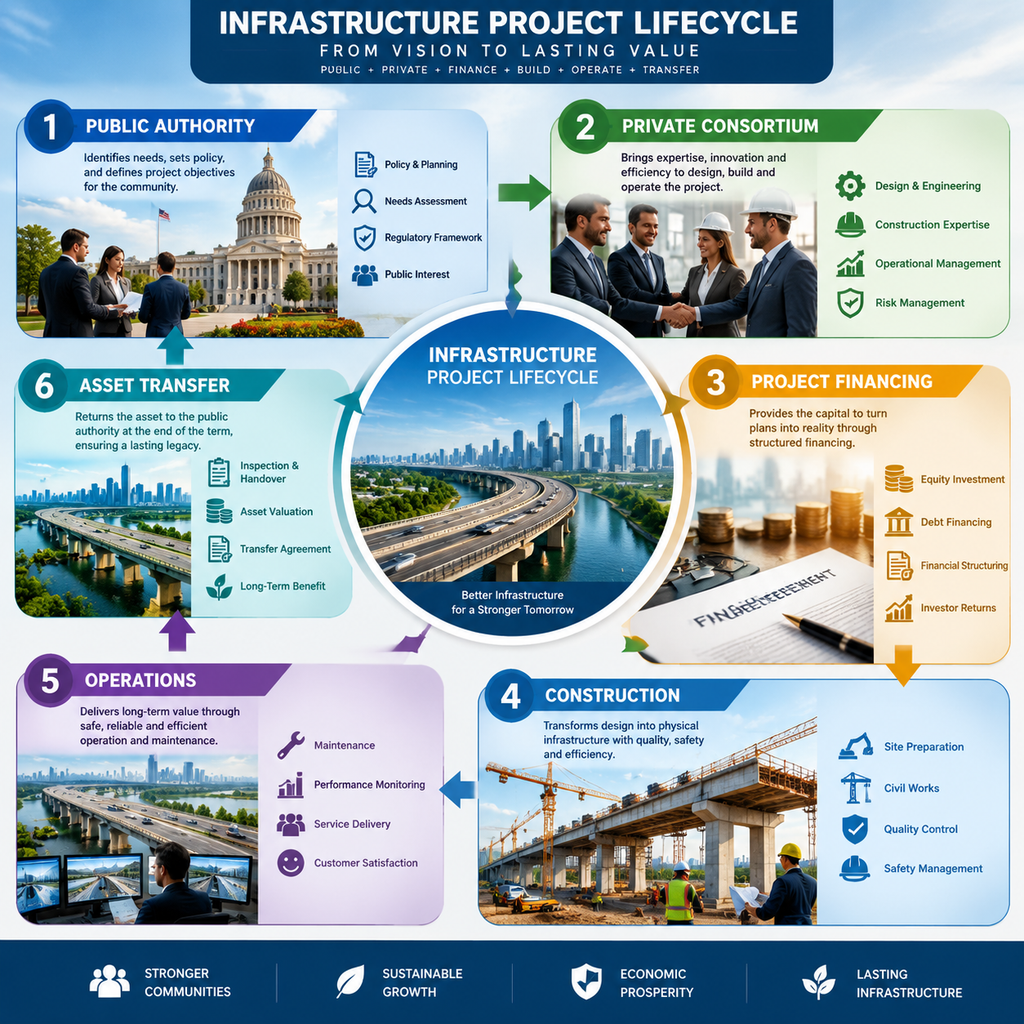
Geopolitical risk affects PPPs by changing lenders’ view of revenue, contract enforceability, and long-term performance obligations. It can influence financing terms and determine whether a risk belongs with the public authority, the private partner, or both.
Project finance relies on predictable cash flows over a long concession or operating period. Lenders examine whether the project can collect user charges or availability payments, access foreign currency, maintain required permits, and continue operating through disruption. Where they see material political or regulatory exposure, they may request higher returns, additional guarantees, reserve accounts, or stronger termination and compensation provisions.
Risk allocation should follow the party best able to control, mitigate, or absorb a risk. A private partner may manage supplier selection and ordinary logistics, while a government may be better placed to address discriminatory legal changes or actions it directly controls. Some events, such as broad conflict-related disruption, may require shared mechanisms, insurance where available, or carefully defined relief provisions.
Contract duration makes precision important. Terms such as change in law, force majeure, political force majeure, compensation event, and termination should define triggers, notice periods, evidence, mitigation duties, and financial consequences. Broad clauses can create uncertainty rather than solve it. A PPP contract also needs a process for reviewing sanctions and compliance obligations as laws change, subject to applicable legal advice.
How procuring authorities can strengthen tender resilience
Procuring authorities can strengthen tender resilience by testing realistic scenarios, publishing transparent rules, designing adaptable contracts, and checking whether critical supply chains have viable alternatives. These steps make political exposure visible early, when procurement choices are still adjustable.
A practical approach is to use a four-part resilience screen: exposure, control, response, and evidence. First, identify the project’s exposure, such as a restricted technology, cross-border lender, or vulnerable shipping route. Next, determine who can control or reduce it. Then define a response, such as a substitute specification or a schedule adjustment. Finally, specify the evidence bidders must provide to show that the response is credible.
- Run scenario planning: Test plausible cases such as a new export licence requirement, supplier unavailability, or delayed investment approval. Focus on consequences and response options, not forecasts presented as certainty.
- Publish stable, transparent criteria: Set out eligibility, sanctions checks, local-content obligations, and security reviews in the tender documents. Explain how changes will be communicated and applied.
- Build proportionate flexibility into contracts: Define substitution, price-adjustment, extension, and relief mechanisms with clear thresholds and evidence requirements. Flexibility should not become an open-ended route to renegotiate the award.
- Test supply-chain plans: Ask for information on critical components, lead times, alternative sources, and compliance responsibilities. Protect commercially sensitive information while still checking resilience.
Authorities should balance resilience against value for money and competition. Duplicate capacity, broad screening, and extensive contingencies have costs. A targeted assessment of high-impact dependencies is usually more useful than requiring every bidder to document every possible geopolitical scenario.
How bidders can assess and manage exposure
Bidders can manage geopolitical exposure by checking legal eligibility, tracing dependencies through their supply chains, testing financial assumptions, and preparing workable contingencies before submitting a proposal. Due diligence should cover partners and suppliers as well as the bidding entity.
Start with the tender rules and the laws that apply to the bidder, its owners, lenders, subcontractors, and proposed suppliers. Screen relevant parties against applicable sanctions lists and review export controls, foreign investment approvals, and local licensing requirements. Because restrictions can change, set a process for rechecking parties at key milestones, including award and mobilisation.
Then map the project’s critical dependencies. Identify components with long lead times, single-source suppliers, sensitive technology, exposed transport routes, and payments that depend on currency conversion. Ask suppliers what alternatives are technically acceptable and how quickly they could be approved. A contingency is useful only if it can meet the project specification and tender timetable.
Finally, model the commercial impact. Test whether the bid remains viable under realistic changes to freight, insurance, exchange rates, financing costs, or delivery dates. Review proposed PPP risk allocation and clarify ambiguous provisions during the procurement’s formal question process. Do not assume a force majeure clause will cover every political event; coverage depends on the contract wording and governing law.
Partnerships can reduce gaps in local knowledge, compliance capacity, and procurement access, but they also introduce additional entities to screen and coordinate. Keep ownership, responsibilities, and escalation channels clear. A well-documented risk register should name each exposure, its owner, the trigger for action, and the evidence that will be used to confirm the response.
Frequently asked questions
Which geopolitical risks can affect an infrastructure tender?
Sanctions, trade restrictions, conflict, diplomatic tensions, foreign investment reviews, and regulatory changes can affect eligibility, equipment sourcing, financing, approvals, schedules, and project costs. Their significance depends on the project’s location, supply chain, funding, and contract terms.
How can sanctions affect bidder eligibility or project delivery?
Sanctions may restrict dealings with a bidder, owner, lender, subcontractor, or supplier, depending on the applicable rules. They can also limit payments, technology transfers, or equipment delivery. Authorities and bidders should seek qualified legal advice and maintain screening as parties and rules change.
How should a PPP contract allocate geopolitical risks?
A PPP contract should assign each risk to the party best positioned to control or mitigate it, then define shared relief for risks neither party can reasonably manage alone. It should state triggers, notice and mitigation duties, schedule and payment consequences, and termination rights in precise terms.
What due diligence should bidders conduct before submitting a proposal?
Bidders should review tender eligibility and compliance rules, screen owners and partners, check sanctions and export-control exposure, verify permits and foreign investment requirements, and map critical suppliers and transport routes. They should also test financing and schedule assumptions against plausible disruptions.