
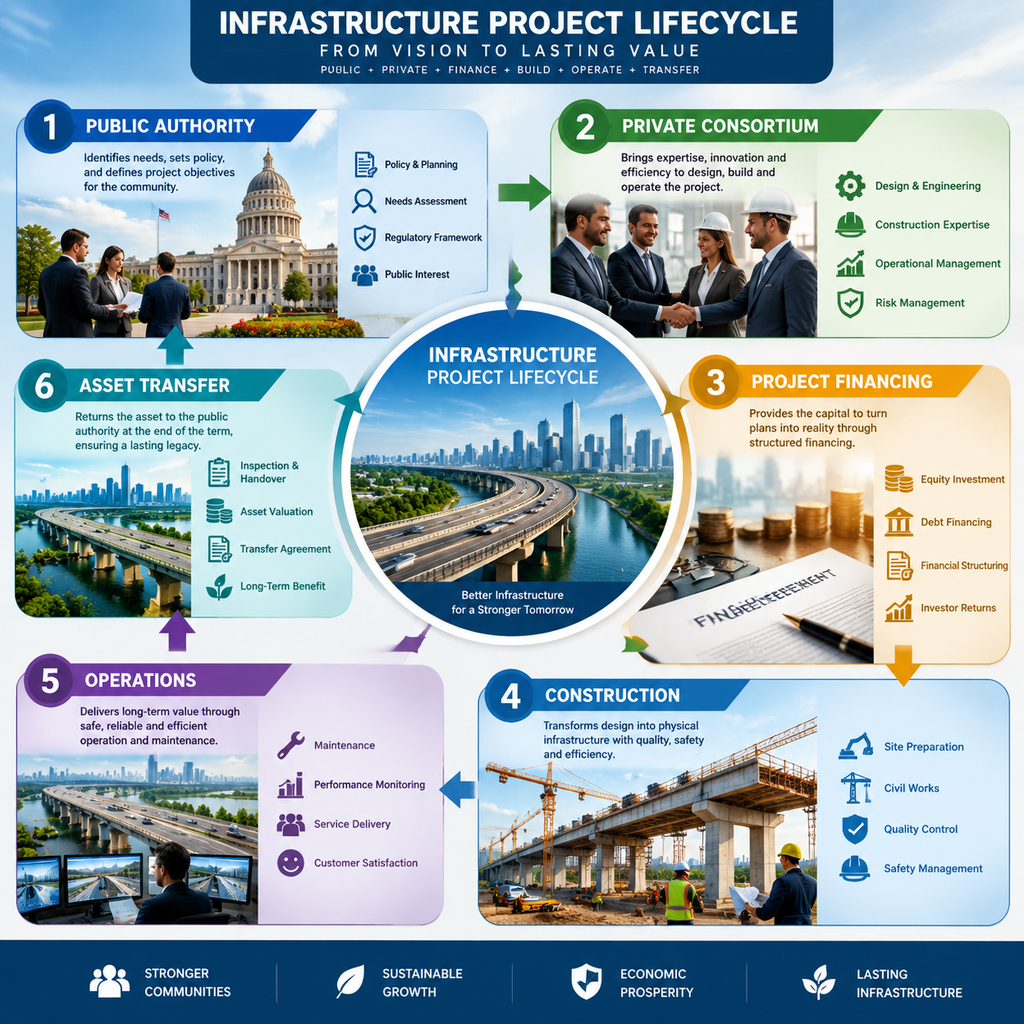

How to Evaluate Infrastructure Tender Opportunities: Key Criteria for Success
Why a Structured Evaluation Process Matters
Firms that bid on every opportunity they encounter rarely win more — they just spend more. A disciplined evaluation process is what separates high-performing tendering teams from those constantly chasing the next RFP without a clear return.
The cost of a poorly evaluated bid is easy to underestimate. Direct bid preparation costs for major infrastructure tenders routinely run into tens or hundreds of thousands of dollars when you factor in technical writing, legal review, financial modeling, and management time. But the indirect cost — diluted focus, team burnout, and missed opportunities on better-fit projects — is often higher.
A structured evaluation framework gives your business development team a repeatable go/no-go filter. Applied consistently across Public-Private Partnership (PPP) opportunities and traditional public procurement, it improves both win rates and the quality of projects in your pipeline. The goal is not to bid less — it is to bid smarter.
Step 1 — Assess Strategic and Market Fit
Before opening a single tender document, ask whether this opportunity belongs in your pipeline at all. Strategic fit is the first filter, and it should be non-negotiable.
Check the tender against three dimensions:
- Sector alignment: Does the project type match your firm's core competency — transport, energy, water, social infrastructure?
- Geographic fit: Is this a market where you have existing relationships, regulatory knowledge, or local partnerships?
- Growth strategy: Does winning this tender move you toward a stated objective, or is it purely opportunistic?
Opportunistic bids on unfamiliar territory are rarely competitive. A road concession in a jurisdiction where you have no track record, no local partner, and no understanding of the regulatory environment is a long shot regardless of how attractive the project looks on paper. The contracting authority will see through thin experience claims during evaluation.
If two of the three dimensions show a poor fit, the default answer should be no-bid — unless there is a compelling strategic reason to invest in breaking into that market deliberately, with realistic expectations.
Step 2 — Analyze the Tender Documents and Contracting Authority
The quality of a tender's documentation tells you almost as much about the project's viability as the project itself. Poorly structured RFP or RFQ documents signal a contracting authority that may not have done the groundwork needed for a successful procurement.
When reviewing the documents, focus on four areas:
- Scope clarity: Is the technical and commercial scope defined with enough precision to price and resource the bid? Vague scope at tender stage becomes disputed variation at contract stage.
- Award criteria: Are evaluation weightings transparent and consistent with what a well-structured project should prioritize? Criteria weighted heavily toward price alone in a complex PPP context is a warning sign.
- Contract structure: Is this a concession agreement, availability payment model, or hybrid? Understanding the revenue mechanism early shapes every downstream financial assumption.
- Contracting authority credibility: Research the issuing authority's track record. Have they successfully closed similar procurements before? Do they have dedicated project delivery capability, or is this their first PPP?
The World Bank's PPP Knowledge Lab maintains guidance on procurement quality benchmarks across different jurisdictions — useful context when assessing a less familiar contracting authority.
Authorities with a history of suspended tenders, extended timelines, or post-award disputes create execution risk that no financial model fully captures.
Step 3 — Evaluate Financial Feasibility and Risk Allocation
Financial feasibility in an infrastructure tender is not just about whether the numbers add up — it is about whether the risk allocation in the contract structure makes those numbers achievable under realistic scenarios.
At the early evaluation stage, you are not building a full financial model. You are running a rapid feasibility screen across three questions:
- Is the revenue model fundable? Availability payments backed by a creditworthy government offtaker carry a very different risk profile than demand-based concessions in an unproven traffic or utility market.
- Does the funding structure include viability gap funding, government equity, or multilateral support — or is the project expected to be entirely privately financed on commercial terms?
- What does the risk allocation matrix look like? In PPP contracts specifically, the assignment of construction risk, demand risk, currency risk, and regulatory change risk between the public and private parties determines whether a project can realistically achieve bankable returns.
A project where the private party absorbs demand risk in a market with no historical traffic data, currency risk in a volatile emerging market, and construction risk on a greenfield site with unresolved land acquisition — simultaneously — is not a PPP. It is a public project with private financing and no upside. That combination rarely produces competitive ROI, and lenders will price it accordingly.
Early-stage ROI signals to watch: implied equity returns in comparable closed transactions in the sector, the contracting authority's stated expected tariff or payment levels relative to market benchmarks, and whether independent advisors (financial, legal, technical) have already been appointed — which indicates a more mature procurement.
Step 4 — Conduct an Internal Capability and Capacity Check
Winning a tender your team cannot deliver is worse than not bidding. An honest internal capability assessment prevents that outcome and protects your firm's reputation with contracting authorities.
Work through four capability dimensions:
- Technical capacity: Does your team hold the specific engineering, operational, or sector expertise the tender requires? Minimum qualification thresholds in RFQ documents are a floor, not a target.
- Financial capacity: Can your firm meet equity commitment requirements, bonding obligations, and working capital demands through the bid period and into financial close?
- Partnership and consortium structure: If gaps exist, do you have established relationships with partners who can credibly fill them — or will you be assembling an untested consortium under time pressure?
- Bandwidth: Is your bid team available? A technically well-suited firm that submits an underprepared proposal because the team was stretched across three simultaneous bids loses to a focused competitor every time.
The bandwidth question is underrated. Infrastructure tender evaluation is not just about the current opportunity — it is about portfolio management. Committing to a bid means committing resources away from other things. That trade-off should be explicit, not assumed.
Step 5 — Identify Red Flags and Disqualifying Factors
Some tender characteristics are not just concerns to manage — they are reasons to walk away. Recognizing disqualifying factors early saves the resources you would otherwise spend on a bid with a structurally compromised foundation.
The following patterns consistently signal high-risk or unbankable opportunities:
- Vague or incomplete scope at a late procurement stage — this usually means the contracting authority does not yet know what they want, and bidders will bear the cost of that ambiguity.
- Unrealistic timelines for bid preparation, particularly on technically complex concession agreements. Compressed timelines favor incumbents and insiders, not competitive newcomers.
- Unfavorable or asymmetric risk transfer — especially when demand risk, force majeure, and regulatory change risk all sit with the private party without compensating return mechanisms.
- No evidence of project financing readiness — no feasibility study, no environmental clearance, no land acquisition progress. Projects that lack these foundations before tender launch frequently stall post-award.
- Political or institutional instability in the host country or contracting authority. A change of government, a pending election, or an authority under institutional restructuring can suspend or cancel a procurement at any stage.
- Excessive number of qualified bidders — if 15 well-resourced firms pre-qualified for a single contract, the bid cost per expected value drops sharply. Factor competitive density into your go/no-go calculus.
None of these factors automatically disqualifies a tender in isolation. Two or more together, however, should trigger a serious no-bid conversation.
Making the Bid/No-Bid Decision with Confidence
A structured bid/no-bid decision translates your evaluation findings into a clear, defensible recommendation — one your leadership team can act on without relitigating every criterion.
The simplest approach is a weighted scoring matrix. Assign each evaluation dimension a weight that reflects its importance to your firm's strategy — financial feasibility and strategic fit typically carry the most weight. Score each criterion on a defined scale (1–5 works well), multiply by weight, and sum the result. Set a threshold score below which the default is no-bid, with an exception process for strategically important opportunities that score just below the line.
A practical scoring matrix might weight criteria as follows:
- Strategic and market fit — 20%
- Tender document quality and contracting authority credibility — 15%
- Financial feasibility and risk allocation — 30%
- Internal capability and capacity — 25%
- Absence of disqualifying red flags — 10%
The specific weights matter less than the discipline of using them consistently. Over time, tracking your scored opportunities against actual bid outcomes lets you calibrate the model — raising the threshold if you are winning too rarely, adjusting weights if certain criteria consistently predict results better than others.
One practical addition: build a mandatory sign-off step where a senior decision-maker reviews any opportunity scoring below threshold before resources are committed. It creates accountability and prevents the instinctive "let's just take a look" that quietly consumes bid budgets without producing wins.
The firms that win infrastructure tenders at above-average rates are not necessarily the most technically capable — they are the ones that choose their battles carefully, commit fully when they do bid, and build evaluation discipline into their business development process as a core competency.
Frequently Asked Questions
What is the most important criterion when evaluating an infrastructure tender?
Financial feasibility and risk allocation typically carry the most weight, because a project that cannot generate bankable returns or that transfers disproportionate risk to the private party is unlikely to reach financial close regardless of other strengths. That said, internal capability is a close second — a well-structured tender your team cannot credibly deliver is not an opportunity.
How do you assess the financial viability of a PPP tender at an early stage?
Focus on three signals before building a full model: the revenue mechanism (availability payment vs. demand-based), the risk allocation in the draft concession agreement, and comparable returns in recently closed transactions in the same sector and geography. These three data points tell you whether detailed modeling is worth commissioning.
What red flags in tender documents should trigger a no-bid decision?
Vague or undefined scope, unrealistic bid preparation timelines, asymmetric risk transfer with no compensating return mechanism, absence of completed feasibility or environmental work, and political instability in the contracting environment are the most consistent disqualifying signals. Two or more present simultaneously is typically sufficient reason to pass.
How does risk allocation differ between traditional public tenders and PPP contracts?
In traditional public procurement, the contracting authority retains most project risk and the private party delivers against a defined specification for a fixed or measured price. In PPP structures, risk is explicitly allocated between parties — construction, demand, availability, currency, and regulatory risk are each assigned, priced, and managed separately. This allocation is negotiated, not assumed, and it is the core mechanism that determines whether a PPP project is bankable.
How long should a tender evaluation process take before a bid decision is made?
For most infrastructure and PPP tenders, a disciplined evaluation process should take between five and fifteen working days from document release to a documented bid/no-bid decision. Larger or more complex concessions may justify longer. The key is front-loading the evaluation so that if the decision is no-bid, you exit early and preserve resources — not after weeks of preliminary work that generated sunk cost pressure to proceed.