
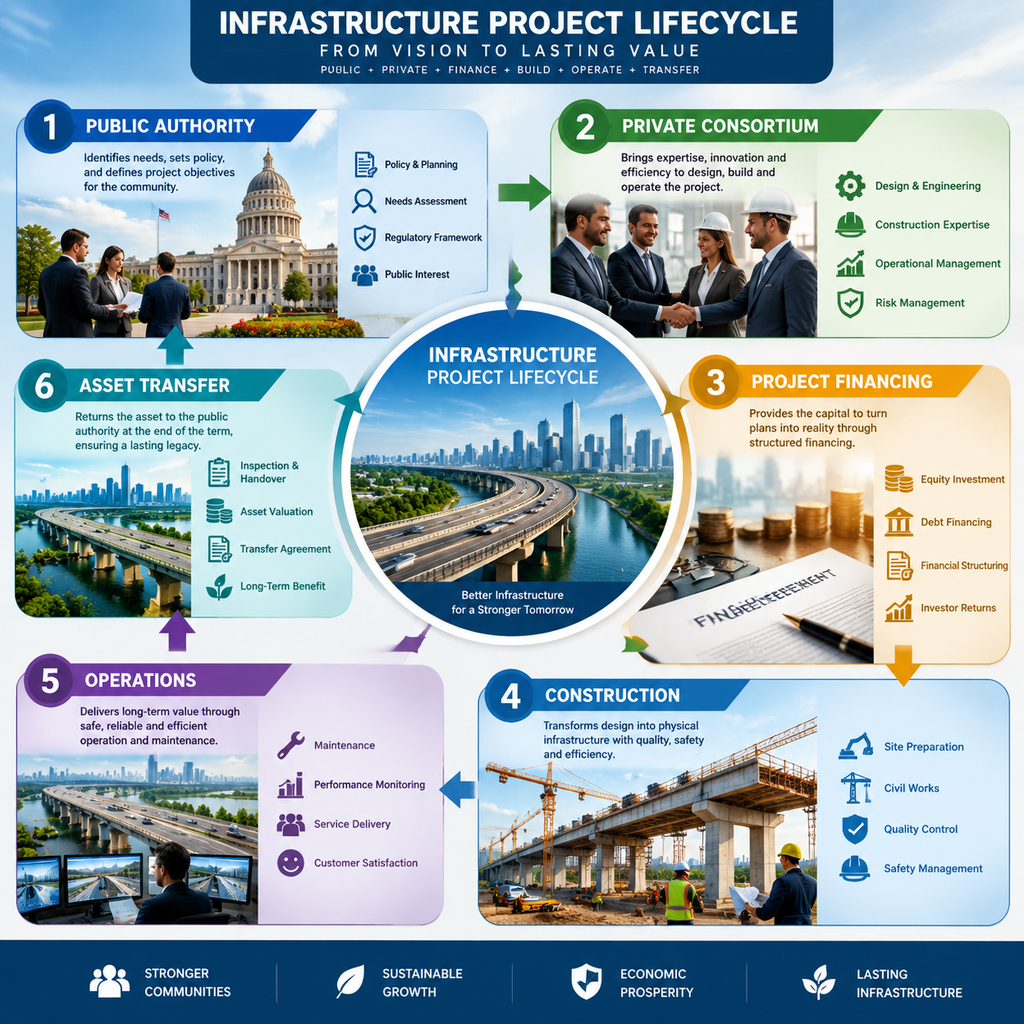

Risk Allocation in PPP Contracts: Best Practices for Public and Private Parties
Risk allocation is the structural backbone of any Public-Private Partnership. Get it right and you have a bankable, deliverable project. Get it wrong and you are looking at renegotiation, cost overruns, or outright project failure — outcomes that erode Value for Money for the public sector and returns for the private party. This guide is written for procurement professionals, legal advisors, and public sector project teams who need practical, contract-level guidance rather than theory.
Why Risk Allocation Is Central to Any PPP Structure
Risk allocation determines whether a PPP project is financeable, deliverable, and sustainable over its concession period. It is not a box-ticking exercise — it is the mechanism through which the entire economic logic of a PPP is expressed.
In a conventional public procurement model, the government absorbs most project risk. In a PPP, risk is deliberately redistributed to the party best positioned to control it. That redistribution is what justifies the private sector's higher cost of capital and what produces the Value for Money case that governments use to justify the PPP route in the first place.
Lenders — the institutions providing project finance — scrutinize risk allocation before they commit a single dollar. A concession agreement that places unmanageable risks on the private party will not achieve financial close. One that leaves excessive risk with the public sector will face political and audit challenges. The allocation has to work for both sides, and for the debt providers sitting behind both of them.
The Core Principle: Risk Should Sit With the Party Best Able to Manage It
The governing logic of sound risk allocation is not maximum transfer to the private sector — it is optimal placement. Each risk should be assigned to whichever party has the greatest ability to prevent it, manage its consequences, or absorb its cost efficiently.
This principle sounds straightforward but breaks down under negotiating pressure. Public sector teams under political pressure to demonstrate risk transfer sometimes push risks onto private parties who cannot price or manage them. The result is inflated bid pricing, thin project margins, and eventual distress when those risks materialize.
A useful test for any risk allocation decision: ask whether the party accepting the risk can actually influence the probability or severity of that risk. If the answer is no, forcing the allocation creates a pricing problem, not a risk management solution. Optimal risk placement produces lower overall project costs because the party managing each risk is the one best equipped to do so efficiently.
Main Risk Categories in PPP Contracts
PPP contracts typically organize risks into six broad categories, each with distinct characteristics and standard allocation logic.
- Construction risk / completion risk: Cost overruns, delays, and technical failures during the build phase. This is almost universally allocated to the private party, who controls contractor selection, design, and construction management.
- Demand risk: Uncertainty about usage volumes — traffic on a toll road, patient numbers at a hospital, passenger throughput at an airport. Allocation depends heavily on the PPP model (see section below).
- Operational risk: Performance failures, maintenance cost escalation, and service quality shortfalls during the operational phase. Typically private sector, but capped through performance payment mechanisms.
- Financial risk: Interest rate movements, inflation, and refinancing risk. Often partially shared, with public sector taking macro-level currency or sovereign risk and the private party managing project-level financial structuring.
- Political and regulatory risk: Changes in law, tariff regulation, expropriation, or government policy shifts that affect project economics. Primarily a public sector risk — the private party cannot control government decisions.
- Force majeure: Events outside both parties' control — natural disasters, pandemics, war. Typically shared, with specific contractual relief mechanisms for each sub-category.
The taxonomy matters because different risk categories require different contractual instruments: performance bonds for construction risk, revenue guarantees for demand risk, stabilization clauses for political risk.
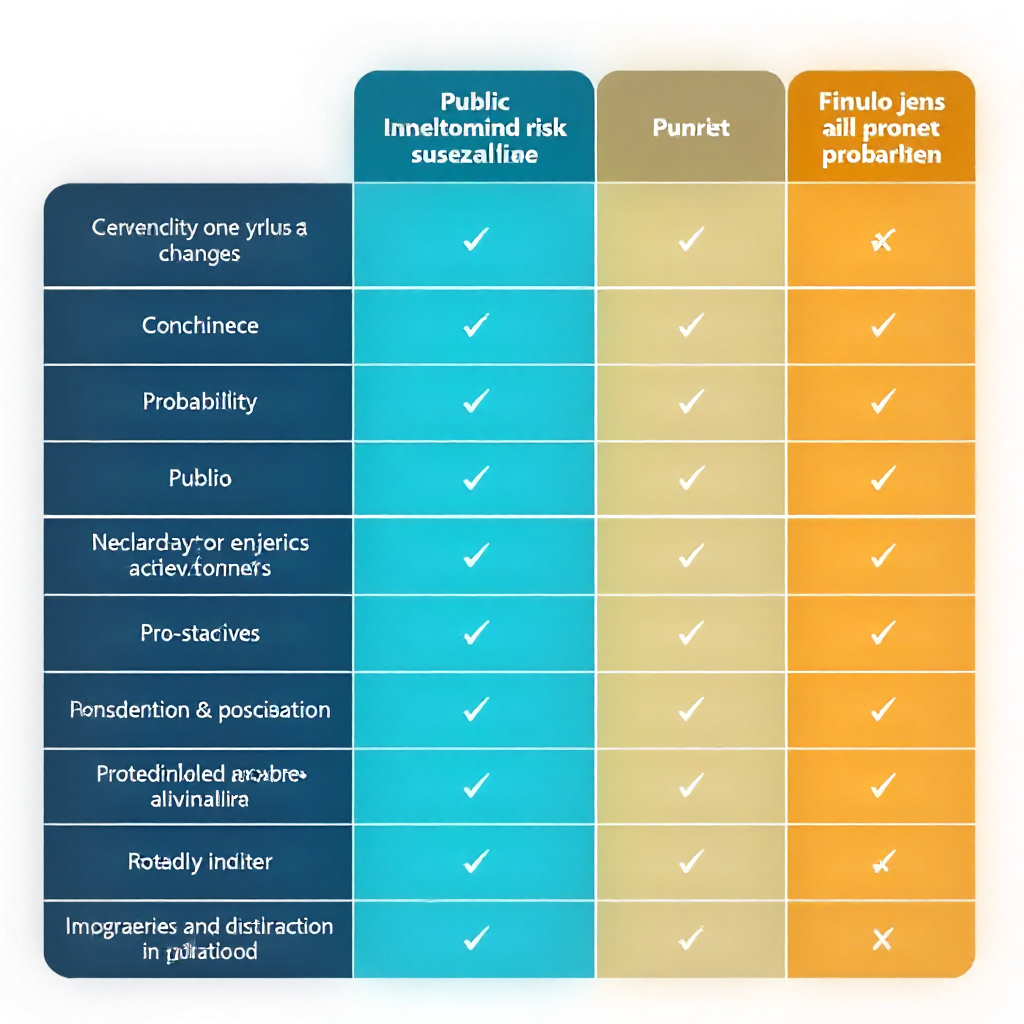
Typical Risk Distribution Between Public and Private Parties
In practice, risk distribution follows recognizable patterns across PPP structures, with the concession agreement as the definitive reference document for what each party bears.
The private party typically accepts construction risk in full, operational performance risk, and refinancing risk. These are areas where private sector expertise, incentive structures, and management capacity justify the allocation. Construction lump-sum contracts and availability deductions create direct financial consequences for poor performance, which is the mechanism that makes the allocation credible rather than theoretical.
The public sector typically retains political and regulatory risk, sovereign currency risk in cross-border projects, and residual demand risk in availability-payment models. In a pure availability-payment PPP — a hospital, a road managed on availability rather than tolls — the government pays a periodic fee regardless of usage, taking demand risk off the private party entirely. This makes the project easier to finance because revenue is predictable, but it means the public sector bears volume risk directly.
In a demand-risk concession — a toll road, a port, an airport — the private operator's revenue depends on actual usage. This can produce higher Value for Money when demand forecasts prove accurate, but it also creates significant exposure when traffic projections are missed, as many toll road concessions in Europe and Latin America demonstrated in the 2000s and 2010s.
The choice between these two models shapes everything downstream: bankability, pricing, contract length, and the nature of renegotiation risk. According to the World Bank PPP Knowledge Lab, availability-payment structures now dominate in social infrastructure sectors precisely because lenders and investors require more predictable revenue profiles.
Building and Using a Risk Matrix
A risk matrix — sometimes called a risk register — is the working document that translates risk allocation principles into contract obligations. It is not a checklist completed during procurement and filed away; it is a live tool used through financial close, construction, and operations.
A well-constructed risk matrix includes at minimum: a description of each risk event, probability and impact ratings, the allocated party, the contractual mechanism managing the risk (bond, insurance, deduction, compensation event), and review triggers. More sophisticated matrices add quantified financial exposure ranges, residual risk values after mitigation, and links to specific contract clauses.
The matrix becomes a negotiation tool during the tender and concession agreement drafting phase. Each row is potentially a commercial negotiation — bidders will price risks they retain, and that pricing should be visible and rational rather than buried in contingency. When lenders conduct their due diligence, they will map the risk matrix against the project's cash flow model to assess whether allocated risks could threaten debt service.
During construction and operations, the matrix functions as an early warning system. Risk owners should review their allocated risks against pre-agreed thresholds — if a risk's probability or impact changes materially, the contract should specify a process for escalation or renegotiation. Projects that treat the matrix as a static document tend to discover risk gaps at the worst possible moment.
Common Mistakes That Undermine Risk Allocation
Three mistakes appear repeatedly in distressed PPP projects, and each is avoidable with better drafting and negotiation discipline.
Over-Allocating Risk to the Private Party
Public sector teams sometimes conflate risk transfer with Value for Money. The reasoning goes: more risk to the private sector means more protection for the government. In practice, private parties price every risk they accept. Allocating unmanageable risks — regulatory change, demand shortfall in a captive-market model, macroeconomic instability — does not eliminate the cost. It converts it into a higher bid price or, worse, a project that cannot reach financial close at all. Lenders will simply decline to finance a structure where the risk profile is irrational.
Ambiguous Force Majeure Clauses
Force majeure provisions are frequently negotiated late, under time pressure, and with insufficient precision. The result is clauses that list event categories without defining what constitutes a qualifying event, what relief is available (time extension vs. compensation vs. termination), and how disputes over force majeure claims are resolved. When a genuine force majeure event occurs — as pandemic-era PPP projects discovered — ambiguous clauses produce protracted disputes that damage both parties and generate renegotiation costs that eliminate any Value for Money originally achieved.
Ignoring Political and Regulatory Risk
In developing markets especially, political risk is frequently underweighted in risk matrices because procurement teams focus on technical and financial risks they understand more directly. Regulatory changes, tariff freezes imposed by new governments, and permitting delays can devastate a project's financial model faster than any construction overrun. Strong concession agreements address political risk through stabilization clauses, compensation events tied to law changes, and — where appropriate — investment treaty protections or multilateral lender involvement that raises the political cost of government interference.
Best Practices for Drafting Risk Allocation Clauses
Effective risk allocation clauses share four characteristics regardless of which risk category they address.
Clear definitions come first. A compensation event clause is only as good as its definition of what triggers compensation. Vague language like "material adverse change" invites dispute. Specific language — tied to measurable thresholds, named regulatory instruments, or objective event criteria — reduces ambiguity and litigation risk.
Every risk allocation should be accompanied by a linked compensation mechanism. Allocating construction risk to the private party without specifying the deduction regime for delays is incomplete. Allocating political risk to the government without specifying how compensation is calculated and paid creates an obligation with no enforcement path.
Contracts should include review triggers that allow parties to revisit risk allocation without full renegotiation. A well-drafted review mechanism — tied to defined thresholds rather than unilateral discretion — reduces the pressure toward informal renegotiation and helps projects absorb unexpected developments within the contract framework.
Finally, risk allocation must be designed with lenders' requirements in mind from the outset. Project finance lenders will require step-in rights, direct agreements, and sometimes their own risk assessment as a condition of financial close. Drafting risk allocation clauses without understanding what the financing structure requires is a common source of late-stage contract amendments that delay projects and increase costs. The concession agreement and the financing agreements need to be consistent — and achieving that consistency requires the project team to engage lenders early, not after the contract is signed.
Frequently Asked Questions
What is the difference between risk transfer and risk sharing in a PPP?
Risk transfer means one party bears a risk entirely — construction risk transferred to the private party, for example. Risk sharing means both parties bear a portion of a risk, often through threshold mechanisms: the private party absorbs losses up to a defined level, and the government compensates beyond that threshold. Demand risk in hybrid concession models is often shared this way, with minimum revenue guarantees providing a public sector floor below which the private operator is protected.
Who typically bears demand risk in a toll road or availability-payment PPP?
In a toll road concession with direct user charges, the private operator bears demand risk — revenue depends on actual traffic. In an availability-payment road PPP, the government pays a fixed periodic fee regardless of traffic volume, so the public sector effectively absorbs demand risk. The availability model is more bankable because revenue is predictable, but the government's fiscal exposure is higher if usage falls short of projections used to justify the investment.
How do lenders assess risk allocation when financing a PPP project?
Lenders conduct their own independent risk analysis — separate from the parties' negotiated positions — to assess whether the project's cash flows are sufficient to service debt under stress scenarios. They focus particularly on revenue risk (is it predictable and contractually supported?), construction risk (are completion guarantees adequate?), and political risk (is the government counterparty creditworthy and is the regulatory framework stable?). A risk matrix that looks balanced from a procurement perspective may still fail lender scrutiny if the financial buffers against key risks are insufficient.
What happens when a risk event occurs that was not anticipated in the contract?
Unanticipated risk events — those falling outside the contract's defined categories — typically trigger renegotiation. Most concession agreements include a general material adverse change provision or a dispute resolution pathway for unforeseen events. In practice, how these situations resolve depends heavily on the relationship between the parties, the political environment, and the quality of the contract's general principles. Projects with robust governance frameworks and clear escalation procedures handle unanticipated events far better than those that relied on exhaustive event lists rather than principled frameworks.
Can risk allocation be renegotiated after financial close?
Technically yes, but it is expensive and complex. Renegotiation after financial close requires the consent of lenders as well as both contracting parties, and lenders will typically require updated financial models, legal opinions, and possibly new security arrangements. More practically, renegotiation creates political and reputational risk for both sides. The better approach is to build flexibility into the original contract through defined review mechanisms and compensation events that allow the allocation to adjust to changing circumstances without triggering full renegotiation.